EdZul · Advancing with AI

Applied AI Engineering Bootcamp

From College Concepts to Production AI Applications

Students today know ChatGPT and AI tools. Very few understand how modern AI products are actually designed, built, integrated and deployed in industry. This workshop closes that gap.

  • Next.js
  • React
  • Node.js
  • PostgreSQL
  • REST APIs
  • RAG
  • Vector databases
  • MCP
  • AI agents

Student voices

In their own words

01 / 10

Ten notes from the workshop at G. Pullaiah College of Engineering and Technology, written by the students on 8 October 2026.

Showing MD Akbar Fardeen. Drag the cards, or use the arrows.
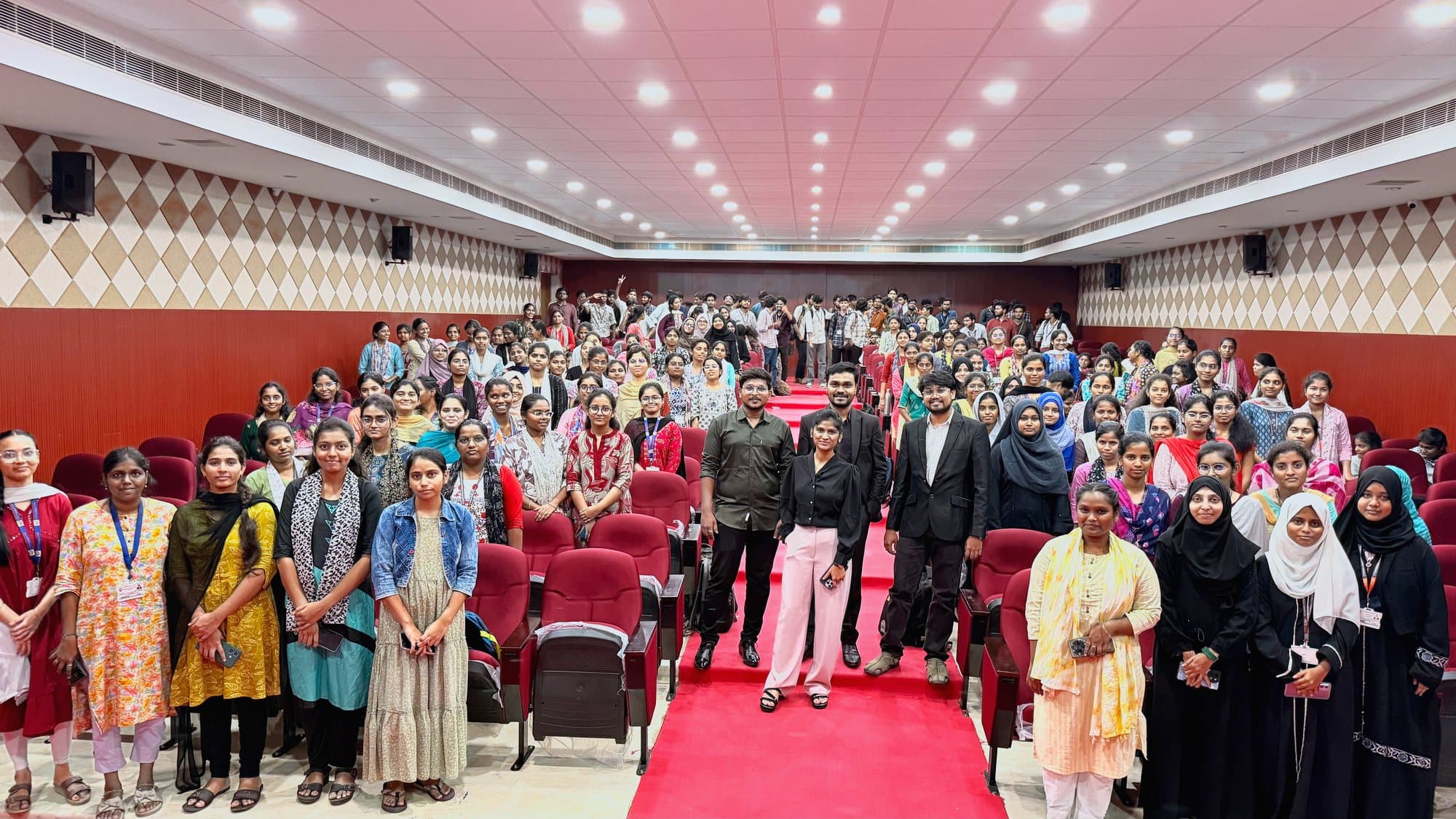
Students and the mentor together in the auditorium at the Edzul workshop in G. Pullaiah College.

Recent workshop

G. Pullaiah College of Engineering and Technology

Students and the mentor in a full auditorium. One campus day.

This is not a basic AI awareness seminar.

Students already know the chat box. We teach the engineering underneath it.

  • how an LLM actually becomes part of a product
  • how AI talks to databases and APIs
  • how RAG works
  • how MCP servers work
  • how AI agents use tools
  • how modern web applications are architected
  • how real engineering teams build AI-powered products
  • how applications are deployed into production
  • what engineering expectations look like inside product companies
Next.jsReactNode.jsPostgreSQLREST APIsRAGVector databasesMCPAI agentsNext.jsReactNode.jsPostgreSQLREST APIsRAGVector databasesMCPAI agents

Workshop philosophy

Learn by building

This workshop is not primarily slides. Students should see applications being built in front of them.

20%

Concepts

Just enough theory to make the build make sense.

30%

Live engineering

Applications built in front of the room.

50%

Hands-on

Demos, interaction, and students in the loop.

“Don't just teach students what AI is. Show them how engineers actually build with AI.”

What college already teaches

  • Programming fundamentals
  • Data structures
  • DBMS
  • Operating systems
  • Computer networks
  • Basic web development
  • Introductory AI / ML

What industry expects

  • Real product architecture
  • APIs and authentication
  • Cloud and Git workflows
  • Scalable applications
  • Debugging and system integration
  • LLM APIs, RAG and AI agents
  • Tool calling and MCP
  • Deployment and production thinking
  • Working with engineering teams

Curriculum

Four modules. One through-line: production AI.

Each module is taught as engineering practice — architecture, trade-offs and a working path — not as a slideshow of definitions.

  1. Module 01

    How Modern Web Applications Work

    Students understand how a real modern web application is structured.

    • Frontend vs backend
    • React / Next.js concepts
    • APIs and REST
    • Databases
    • Authentication
    • Client-server architecture
    • How frontend, backend and databases communicate
    • Production application architecture
  2. Module 02

    Understanding Generative AI

    Students learn how software engineers consume and integrate models — not how to derive the math.

    • What is an LLM?
    • Tokens and context windows
    • Prompting and inference
    • Hallucinations and model limitations
    • Model APIs
    • Structured outputs
    • Function / tool calling
  3. Module 03

    Build an AI-Powered Application

    Students see one simple application built end-to-end, live.

    • Frontend → backend → LLM → database / APIs
    • Live demonstration and hands-on application
    • Wiring an LLM into a real request path
    • Handling model responses in product UI
  4. Module 04

    RAG — Retrieval-Augmented Generation

    Students can explain how an AI answers from uploaded college documents instead of guessing.

    • Embeddings and vector databases
    • Document ingestion and chunking
    • Semantic search and context retrieval
    • Grounding AI answers
    • Reducing hallucinations
    • How companies use RAG for policies, docs, support and search
System DesignMicroservicesEvent-driven architectureWebSocketsCloud architectureDockerVector databasesAI evaluationLLM observabilityAI securityBuilding SaaS applicationsStartup product engineering

Two-day format

A schedule designed for attention, not coverage

Day 1 gets students from architecture to a working AI application. Day 2 moves from tools and agents to how product teams actually ship.

Day 1

Foundation to AI Application

  1. Session 1Modern software engineering and product architecture
  2. Session 2How LLMs and Generative AI work
  3. Session 3LLM APIs, prompting, structured outputs and tool calling
  4. Session 4Build a small AI-powered web application
  5. Session 5RAG, embeddings and vector databases
  6. Hands-onBuild / demonstrate a document-aware AI application

Day 2

From AI App to AI Engineer

  1. Session 1MCP architecture and MCP servers
  2. Session 2Live MCP server demonstration
  3. Session 3AI agents and tool-based applications
  4. Session 4Real-world product engineering
  5. Session 5AI-assisted development workflows
  6. Session 6Career roadmap + industry Q&A

Outcomes

By the end of the workshop students will understand

01

How modern web applications work

02

How LLM applications are built

03

How to integrate AI APIs

04

How RAG works

05

How vector databases work

06

How MCP servers work

07

How AI uses external tools

08

How agents work

09

How production AI applications differ from demos

10

How software teams operate

11

What skills product companies expect

12

How to start building their own AI projects

Who it is for

2nd / 3rd / 4th year. The curriculum is adjusted to student year and specialisation.

  • B.Tech CSE
  • CSE AI / ML
  • Artificial Intelligence
  • Data Science
  • IT
  • MCA
  • Interested ECE students

What the college gains

  • Industry exposure beyond the academic syllabus
  • Practical AI knowledge students can apply to projects
  • Understanding of modern engineering workflows
  • Hands-on exposure to live product architecture
  • Stronger final-year and mini-project quality
  • Better placement readiness for product companies
  • Awareness of current AI engineering trends
  • Direct interaction with practising engineers
  • Ability to start building real AI applications
Duration
1-Day / 2-Day
Delivery
On-Campus
Format
Interactive + Live Coding + Demonstrations
Audience
Engineering students
Batch Size
Flexible by institution
Curriculum
Customisable to college needs
S. Md. Yaseen

Mentor

S. Md. Yaseen

Founder, EdZul

Senior Software Engineer & AI Product Builder · 9+ years

Software engineer and product builder with experience across startups, fintech, enterprise software and AI products. His career has included engineering environments such as Microsoft, Goldman Sachs, BYJU’S, CRED and Ola/Krutrim.

“Students should not wait until their first job to understand how real products are built.”

Previously at

  • Microsoft
  • Goldman Sachs
  • Ola / Krutrim
  • BYJU'S
  • CRED

Certificate

Certificate of Participation — Applied AI Engineering Bootcamp by EdZul

Issued to students who complete the workshop. This is a participation certificate from EdZul — not an accredited university or government certification.

EdZul

Applied AI Engineering Bootcamp

Certificate of Participation

On-campus · 1-day / 2-day · Industry-led

FAQ

Questions colleges usually ask

Is prior AI knowledge required?+

No. Basic programming understanding is enough for the standard workshop. We adjust depth for 2nd, 3rd and 4th year batches.

Is this workshop theoretical?+

No. It is built around live engineering, demonstrations and application architecture. Slides are supporting material, not the main event.

Can the workshop be customised?+

Yes. Curriculum can be adapted based on student year, specialisation and the college’s existing lab setup.

Do students need laptops?+

Recommended for hands-on sessions. We can also run a demonstration-led format when device access is limited.

How long is the workshop?+

Standard formats are one-day and two-day bootcamps. A custom schedule can be designed with the HOD or TPO.

Will students receive certificates?+

Students who complete the workshop can receive a Certificate of Participation — Applied AI Engineering Bootcamp by EdZul. This is a participation certificate, not an accredited degree credential.

Can faculty attend?+

Yes. Faculty participation is encouraged — it helps the department continue the conversation after the workshop.

Recent workshops

G. Pullaiah College of Engineering and Technology

1 / 12

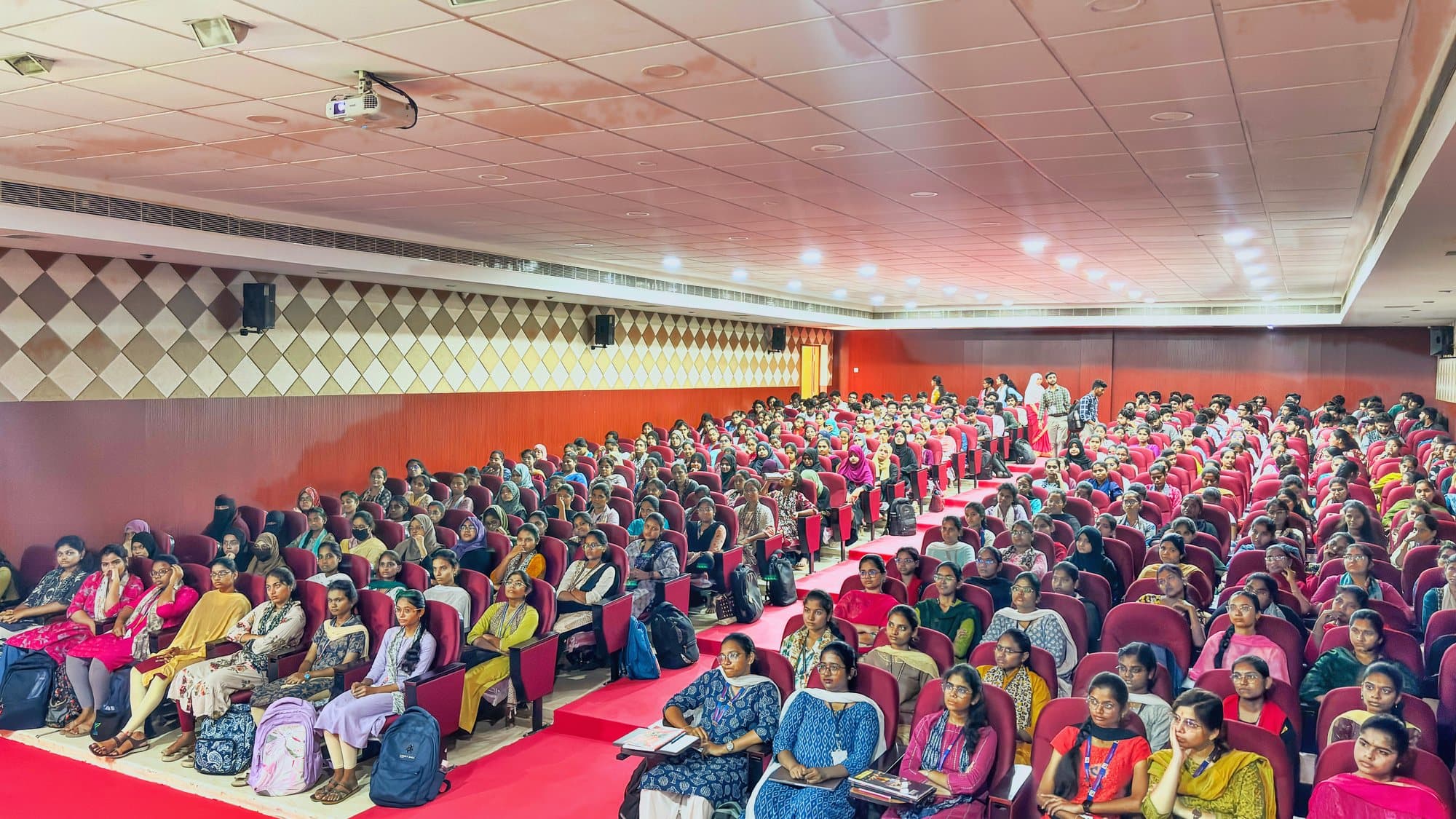
A full auditorium of students at the Edzul workshop in G. Pullaiah College.

Slide 1 of 12. A full auditorium of students at the Edzul workshop in G. Pullaiah College.

Invite EdZul

Bring Applied AI Engineering to your campus

Give your students exposure to the tools, architecture and engineering practices shaping the next generation of software products.

This is not another ChatGPT awareness seminar. Students get real industry and engineering exposure.

Preferred Workshop Format